
What is Dyslexia?
Dys = Difficulty
Lexia = Language
Susan Barton is a leading expert in the fields of dyslexia and ADD/ADHD and founder of the Barton Reading and Spelling System. She reports, “Dyslexia is an inherited condition that makes it extremely difficult to read, write, and spell in our native language-despite at least average intelligence.”
The National Institute of Health states: “Dyslexia is a specific learning disability that is neurological in origin. It is characterized by difficulties with accurate and/or fluent word recognition, and by poor spelling and decoding abilities. These difficulties typically result from a deficit in the phonological component of language that is often unexpected in relation to other cognitive abilities and the provision of effective classroom instruction. Secondary consequences may include problems in reading comprehension and reduced reading experience that can impede growth of vocabulary and background knowledge.”
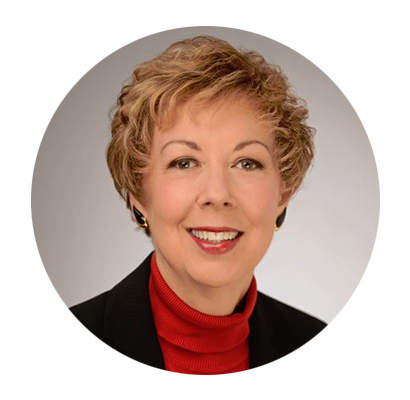
Susan Barton
Symptoms of Dyslexia
In Preschool
- Delayed speech
- Mixing sounds & syllables in long words
- Chronic ear infections
- Severe reactions to childhood illnesses
- Constant confusion of left versus right
- Late establishing a dominant hand
- Struggles with learning to tie shoes
- Difficulty memorizing their address, phone number, or the alphabet
- Unable to create words that rhyme
- A close relative with dyslexia
In Elementary School
- Dysgraphia (slow, non-automatic handwriting that is difficult to read)
- Letter or number reversals continuing past the end of first grade
- Extreme difficulty learning cursive
- Slow, choppy, inaccurate reading
- – guesses based on shape or content
- – skips or misreads prepositions (at, to, of)
- – ignores suffixes
- – cannot sound out unknown words
- Extremely poor spelling
- Often cannot remember sight words (i.e. they, were, does)
- Often cannot remember homonyms (i.e. their, they’re, there)
- Difficulty telling time on a clock with hands
- Math struggles:
- – memorizing multiplication tables
- – memorizing a sequence of steps
- – directionality
- Difficulty finding the correct word
- – lots of “whatchamacallit” & “thingies”
- – common sayings come out slightly twisted
- Extremely messy bedroom, backpack, & desk
- Dreads going to school
- – complains of stomach aches or headaches
- – may have nightmares about school
In High School
- All of the above symptoms plus:
- Limited vocabulary
- Extremely poor written expression
- – large discrepancy between verbal skills and written
- Unable to master a foreign language
- Difficulty in reading printed music
- Poor grades in many classes
- May drop out of high school
As Adults
- Education history similar to above plus:
- May have to read a page two or three times to understand it
- Extremely poor spelling
- Difficulty in putting thoughts onto paper
- – dreads writing memos or letters
- Still has difficulty with right versus left
- Often gets lost, even in a familiar city
- Sometimes confuses “b” and “d”, especially when tired or sick
Latest Brain Research
Modern neuro-imaging has made it possible to “see” inside living, performing human brains. Through the extensive research of Dr. Samuel Orton and Anna Gillingham, pioneers in the field of dyslexia, it was discovered that the brain is comprised of a left and right hemisphere. They also observed that the brain is 10% larger in the right creative hemisphere of a dyslexic person. This is the reason behind many of the gifts of a dyslexic person.
Both reading and language take place in the left hemisphere. Through the use of fMRI, it has been proven that dyslexics use alternate circuits and alternate pathways. To learn more about this fascinating research, read Overcoming Dyslexia, by Dr. Sally Shaywitz, M.D.
As stated by the NIH, April 19th, 2004, press release, “A brain imaging study has shown that, after they overcome their reading disability, the brains of formerly poor readers begin to function like the brains of good readers, showing increased activity in a part of the brain that recognizes words.”
Brain images show that effective reading instruction will not only improve reading ability, but will also change the brain’s functioning so that it can perform reading tasks more efficiently.

Famous People With Dyslexia
Athletes
Babe Ruth
Jason Kidd
Nolan Ryan
Jackie Stewart
Muhammad Ali
Scott Quinnell
Duncan Goodhew
Magic Johnson
Greg Louganis
Bob May
Diamond Dallas Page
Steve Redgrave
Tim Tebow
Brent Sopel
Inventors & Scientists
Henry Ford, Inventor of the assembly line
The Wright Brothers, Aviators
Michael Faraday, Inventor of electromagnets
Alexander Graham Bell, Inventor of the telephone
Carol Greider, Molecular Biologist
John Robert Skoyles, Neurosurgeon
Ann Bancroft, Explorer
Pierre Curie, Physicist
Harvey Cushing, Surgeon
Sir Isaac Newton, Scientist
Thomas Edison, Inventor of the light bulb
Albert Einstein, Physicist and Mathematician
Fred Epstein, Neurosurgeon
Galileo Galilei, Scientist
Willem Hollenbach, Astronomical Photographer and Inventor
John R. Horner, Paleontologist
Archer Martin, Chemist
Louis Pasteur, Microbiologist
Helen B. Taussig, Cardiologist
Werner Von Braun, Rockets
Eli Whitney, Inventor of the cotton gin
Military Heroes
“Stonewall” Jackson
George Patton
Writers
Jules Verne
Agatha Christie
Avi
John Corrigan
Steven Cannell
Samuel R. Delaney
Andrew Dornenburg
F. Scott Fitzgerald
Fannie Flagg
Gustave Flaubert
John Irving
Elizabeth Daniels Squire
Patricia Polacco
Eileen Simpson
Bernie Taylor
Jules Verne
Victor Villasenor
Edgar Allen Poe
W.B. Yeats
Jeanne Betancourt
Hans Christian Anderson
Sir Francis Bacon
Artists, Designers & Architects
Pablo Picasso
Ansel Adams
Alice Williams, Photography
Andy Warhol
August Rodin
Bennett Strahan
David Bailey, Photographer
Ignacio Gomez, Muralist
Jorn Utzoh, Architect
Leonardo da Vinci
Michelangelo
Robert Rauschenberg
Robert Toth
Tommy Hilfiger, Designer
Vincent Van Gogh
Law & Justice
David Boies, Attorney
Erin Brockovich, Investigator
Jeffrey H. Gallet, Judge
Political Leaders
Benjamin Franklin
Napoleon Bonaparte
Prince Charles
George Washington
Winston Churchill
George W. Bush
Eleanor Roosevelt
George H. W. Bush
Princess Beatrice
Andrew Jackson
Woodrow Wilson
Robert Kennedy
John F. Kennedy
Thomas Jefferson
Lyndon B. Johnson
King Carl XVI Gustaf of Sweden
Entrepreneurs & Business Leaders
Nelson Rockefeller, Philanthropist
G. Chris Anderson, Paine Webber
William Hewlett, Hewlett-Packard
Ted Turner, Turner Broadcasting
Paul J. Orfalea, Kinko’s
Craig McCaw, Telecommunications
John T. Chambers, Cisco
Ingvar Kamprad, IKEA
O.D. McKee, McKee Foods
Richard Branson, Virgin Enterprises
David Neeleman, JetBlue Air
Charles Schwab, Investor
Frank Winfield Woolworth, F.W. Woolworth
Steve Jobs, Apple
Filmmakers
Robert Benton
Nicole Betancourt
Walt Disney
Soren Kragh Jacobsen
Musicians
Ludwig Van Beethoven
Harry Belafonte
Noel Gallagher
Nigel Kennedy
Wolfgang Amadeus Mozart
Actors & Entertainers
Fred Astaire
Harry Anderson
Harry Belafonte
Orlando Bloom
Patrick Dempsey
Dave Foley
Harrison Ford
Danny Glover
Tracey Gold
Whoopi Goldberg
Susan Hampshire
Salma Hayek
Anthony Hopkins
Keira Knightley
Jay Leno
Edward James Olmos
Oliver Reed
Keanu Reeves
Will Smith
Tom Smothers
Suzanne Somers
Billy Bob Thornton
Vince Vaughn
Lindsay Wagner
Robin Williams
Henry Winkler
Loretta Young